
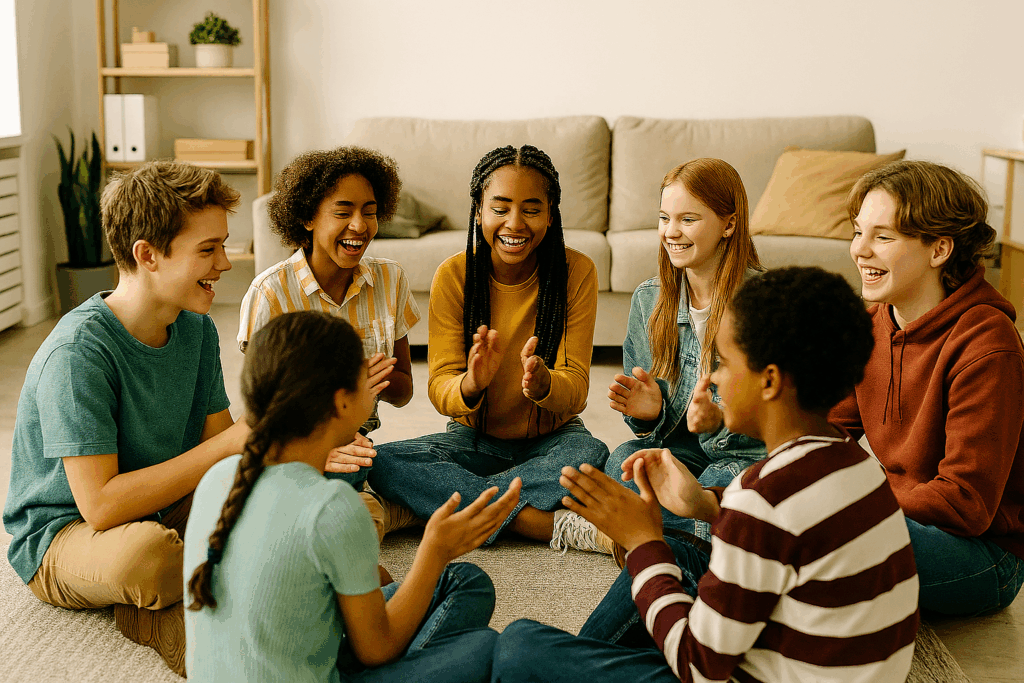
Sample Playful Learning: Game-Based Education as a Tool for Classroom Inclusion
di Camilla Sciandra
Abstract. Nel panorama educativo contemporaneo, l’inclusione scolastica richiede approcci didattici capaci di valorizzare le differenze, ridurre le barriere e promuovere la partecipazione attiva di ogni studente. Il Playful Learning, inteso come apprendimento attraverso il gioco, si configura come metodologia inclusiva che integra dimensioni cognitive, emotive e sociali, sostenuta da solide basi teoriche (Vygotskij, Dewey, Bruner, Resnick). L’articolo esplora i fondamenti scientifici di questo approccio, descrive i principi cardine (coinvolgimento attivo, creatività, collaborazione e adattabilità), e presenta strategie operative come gamification, escape room educative, storytelling interattivo e role-playing, arricchite da esempi di applicazione in contesti scolastici eterogenei. Sono analizzati risultati di ricerche e casi studio che evidenziano benefici in termini di engagement, competenze sociali, resilienza e performance accademiche. Le prospettive future puntano a una sempre maggiore integrazione con le tecnologie digitali e con i principi dell’Universal Design for Learning, per garantire un’istruzione equa e partecipativa.
Parole chiave: apprendimento, classe, inclusione, insegnamento, gioco
Abstract. In today’s educational context, fostering inclusion requires teaching methods that value diversity, remove barriers, and actively engage all learners. Playful Learning—learning through play—emerges as an inclusive methodology integrating cognitive, emotional, and social dimensions, grounded in strong theoretical frameworks (Vygotsky, Dewey, Bruner, Resnick). This article explores the scientific foundations of this approach, outlines its core principles (active engagement, creativity, collaboration, adaptability), and presents operational strategies such as gamification, educational escape rooms, interactive storytelling, and role-playing, enriched with examples from diverse school contexts. It analyses research findings and case studies showing benefits in terms of engagement, social skills, resilience, and academic achievement. Future perspectives point towards deeper integration with digital technologies and the principles of Universal Design for Learning, ensuring equitable and participatory education for all
Keywords: learning; classroom; inclusion; teaching; play
Bibliografia
Alotaibi, M. S. (2024). Game-based learning in early childhood education: A systematic review and meta-analysis. Education Sciences, 14(2), 123–145.
Andreoletti, M., Tinterri, A., & Dipace, A. (2024). Playing in the classroom: Italian teachers’ acceptance of game-based learning. QTimes, 16(3), 818–832.
Bateson, P. (2013). Play, Playfulness, Creativity and Innovation. Cambridge University Press.
Bruner, J. (1996). The Culture of Education. Harvard University Press.
CASEL (2020). Core SEL Competencies. Collaborative for Academic, Social, and Emotional Learning.
Canevaro, A. (2006). Pedagogia speciale: la riduzione dell’handicap. Erickson.
Dewey, J. (1938). Experience and Education. Macmillan.
Doidge, N. (2007). The Brain That Changes Itself: Stories of Personal Triumph from the Frontiers of Brain Science. Viking.
European Council (2018). Council Recommendation on Key Competences for Lifelong Learning. Official Journal of the European Union.
Gee, J. P. (2007). What Video Games Have to Teach Us About Learning and Literacy. Palgrave Macmillan.
Ianes, D. (2020). La didattica per l’inclusione: strategie, strumenti, buone prassi. Erickson.
Immordino-Yang, M. H. (2015). Emotions, Learning, and the Brain: Exploring the Educational Implications of Affective Neuroscience. W. W. Norton & Company.
LEGO Foundation. (2019). Learning through play at school (6–12). Billund, DK: LEGO Foundation.
Lillard, A. S., et al. (2013). The impact of pretend play on children’s development: A review of the evidence.
Li, X., Zhang, S., & Chen, H. (2024). A systematic literature review of playful learning in primary education (2014–2023). Education 3–13. Advance online publication.
Meyer, A., Rose, D. H., & Gordon, D. (2014). Universal Design for Learning: Theory and Practice. CAST Professional Publishing.
Quek, L. H., Low, J. Y., Ong, G.-B., & Shorey, S. (2024). Educational escape rooms for healthcare students: A systematic review. Nurse Education Today, 130, 105967.
Resnick, M. (2017). Lifelong Kindergarten: Cultivating Creativity through Projects, Passion, Peers, and Play. MIT Press.
Rossi, G. (2021). Giocare per includere: esperienze di Playful Learning nella scuola primaria italiana. Rivista di Pedagogia Scolastica, 15(2), 45-60.
Schön, D. A. (1983). The Reflective Practitioner: How Professionals Think in Action. Basic Books.
Vygotskij, L. S. (1978). Mind in Society: The Development of Higher Psychological Processes. Harvard University Press.
Wiggins, G. (1998). Educative Assessment: Designing Assessments to Inform and Improve Student Performance. Jossey-Bass.
Zeng, J., Sun, D., Looi, C.-K., & Fan, A. C. W. (2024). Exploring the impact of gamification on students’ academic performance: A meta-analysis (2008–2023). British Journal of Educational Technology, 55(6), 2478–2502.
Zosh, J. M., et al. (2018). Learning through play: a review of the evidence. LEGO Foundation
